
Key takeaways
- Most celebrity beauty brands operate under licensing agreements where the celebrity receives royalties rather than owning production outright, with formulation taking 6 to 18 months and costs ranging from $5 to $50 million to launch.
- Retail pricing sits 20 to 50 percent above mass-market brands but below prestige competitors, with manufacturers typically investing 15 to 25 percent of revenue in marketing because the celebrity is the primary customer acquisition channel.
- Formula quality, shade range diversity, and consistent celebrity visibility matter more than the celebrity's fame alone—brands that underinvest in R&D or whose celebrities become absent often plateau within two years.
- Success requires coordinated effort from cosmetic chemists, color technicians, packaging engineers, and supply chain experts working behind the scenes while the celebrity provides creative direction and brand credibility.
A celebrity announces a new beauty brand, and within months it appears at Sephora. The narrative suggests a personality-driven empire, but the actual architecture is industrial. Celebrity beauty brands operate on licensing agreements, third-party manufacturers, and investor capital, with the celebrity functioning as the creative direction and brand asset rather than the owner of production. Understanding this machinery reveals why some brands reach $600 million in annual revenue while others vanish within two years.
The Licensing Model: Who Actually Owns the Brand
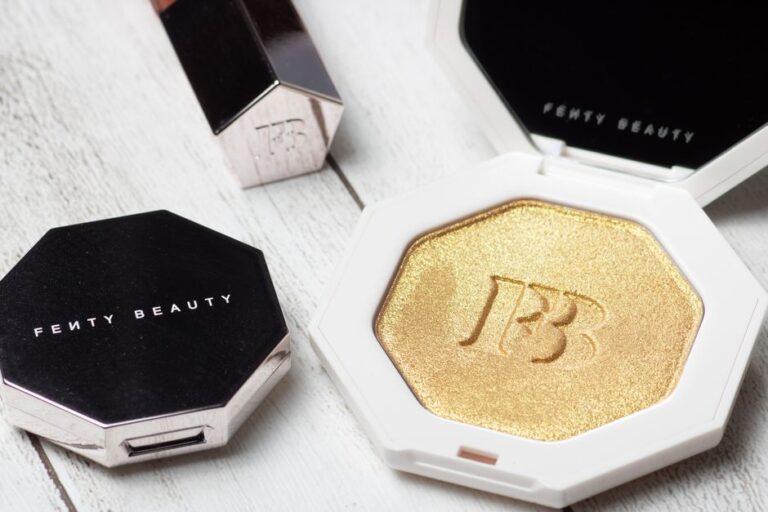
Most celebrity beauty brands are not owned entirely by the celebrity. Instead, a licensing agreement grants the celebrity’s name, image, and approval rights to a beauty conglomerate or independent manufacturer in exchange for royalties, typically 5 to 15 percent of net sales. Kylie Cosmetics operated this way under Kendo Brands (a division of Estée Lauder Companies) before Kylie Jenner reacquired majority stakes in 2021. Fenty Beauty, by contrast, is majority-owned by LVMH but Rihanna retains significant equity and maintains veto power over product approvals and brand direction.
The alternative structure involves the celebrity or a private investor funding the brand independently, then negotiating shelf space and distribution through retail partners. This path requires capital ranging from $5 million to $50 million just for initial formulation, manufacturing setup, packaging, and marketing. It also means the celebrity and their team absorb all production costs, regulatory compliance, and inventory risk—if the brand underperforms, the loss falls on them directly.
The licensing route provides upfront cash and transfers operational risk to the partner, but limits creative control. Independent ownership gives creative autonomy but demands financial sophistication and a team experienced in supply chain management and regulatory affairs.
From Concept to Counter: The Development Timeline
Research and Formulation Phase
Once a licensing deal or funding closes, the brand enters the formulation phase, which typically takes 6 to 18 months. A chemist or formulation team creates candidate products by blending actives (vitamin C, hyaluronic acid, retinol), emulsifiers, preservatives, and fragrance. The celebrity participates through approval rounds: testing products on their own skin, providing feedback on texture, shade range for foundations, and sensory qualities like scent and feel on application. This is not marketing theater—the celebrity’s preferences directly shape the final formula because they will be the first endorser and their skin type is known.
Stability testing runs in parallel. A foundation or serum must remain stable across temperature ranges, light exposure, and shelf life (typically 12 to 36 months depending on the product category). This requires submitting samples to stability chambers and periodically analyzing them for separation, oxidation, or bacterial growth. A single instability failure sends the formula back to the lab for weeks of reformulation.
Regulatory and Ingredient Approval
The FDA classifies cosmetics as either cosmetic (color, texture, appearance) or drug (therapeutic claims like acne-fighting or UV protection). If a product makes a drug claim, it requires drug approval—a much longer and costlier process. Most celebrity beauty brands stick to cosmetic claims to accelerate launch. A tinted moisturizer cannot claim to treat acne; it can only claim to hydrate and provide coverage.
Ingredient approval means confirming every actives, preservative, and fragrance compound is permissible under FDA and international regulations. Some ingredients banned in the United States are approved in Europe, and vice versa. If a brand plans to launch in multiple regions, the formula must satisfy the most restrictive standard or be reformulated per market.
Packaging and Logistics
Packaging represents 15 to 40 percent of product cost. A celebrity beauty brand typically commissions custom bottle shapes, caps, and labels to differentiate from competitors. This requires tooling costs—creating molds for unique bottle designs can run $20,000 to $100,000 per SKU. Once approved, the manufacturer sources materials (glass, plastic, labels, boxes) in volume, which takes additional lead time (8 to 16 weeks for custom labeling and specialized closures).
Shipping final product to distribution centers occurs 60 to 90 days before the public launch date, ensuring stock is in place for the first day of sales.
Pricing Strategy and Margin Structure
Celebrity beauty brands typically price 20 to 50 percent above mass-market equivalents but 30 to 60 percent below prestige brands like Charlotte Tilbury or Estée Lauder. A foundation from Fenty Beauty retails around $32 to $38; Maybelline’s equivalent is $7 to $9; Charlotte Tilbury’s is $48 to $54. This positioning signals quality and prestige without the ultra-luxury price tag that requires decades of heritage to justify.
Retail markup is standard: the brand (or manufacturer/licensor) sells to the retailer at approximately 40 to 50 percent of retail price. If a concealer retails at $28, the retailer paid roughly $14 to $17 for it. The manufacturer’s cost to produce, fill, and package that same concealer is typically $3 to $7. The remaining margin covers R&D, marketing, overhead, and royalty payments to the celebrity. Celebrity beauty brands typically allocate 15 to 25 percent of revenue to marketing and influencer partnerships—far higher than traditional beauty brands—because the celebrity’s initial credibility is the primary customer acquisition channel.
Distribution Channels and Retail Placement
A celebrity brand’s first retail anchor is usually Sephora or Ulta, both of which have dedicated shelf space and robust digital platforms. Sephora stocks prestige brands; Ulta carries prestige and mid-market. Securing placement requires the brand to meet Sephora’s or Ulta’s sales projections and supply standards. Projected first-year sales of a new line at a single Sephora location can range from $20,000 to $100,000 depending on the category and brand strength.
Direct-to-consumer (DTC) through a brand website or app is the second channel. DTC margins are higher (no retailer markup), but customer acquisition costs are steep. A DTC customer might cost $15 to $40 in ad spend to acquire; Sephora or Ulta customers are acquired through retail foot traffic and in-store discovery. Many celebrity brands launch DTC-first to build hype, then expand to retail once sales data proves demand.
International expansion follows a similar pattern. UK distribution via Space NK or Boots, Australian via Mecca, or Japanese via Sephora Japan and Isetan requires different formulations (some ingredients differ by region) and localized regulatory approval. A global rollout can stretch 2 to 4 years post-launch.
What Actually Determines Success or Failure
Formula Quality and Shade Range
A brand that launches with 40 foundation shades outperforms one with 15 in its first year because it captures a larger addressable market. Fenty Beauty became iconic partly because its foundation range (40 shades at launch) appealed to consumers of color who had historically felt excluded by other brands. Formula stability and skin compatibility matter more than celebrity endorsement; if a product pills, separates, or irritates skin, social media amplifies the failure within days.
Retail Execution
A brand with strong marketing but poor in-store display or stockouts loses momentum. Ulta and Sephora allocate shelf space based on sell-through rates. If a product does not move, it is delisted. Celebrity brands that survive their first year typically invest in in-store events, sampling programs, and staff training so retail associates can explain the brand’s positioning and products to shoppers.
Sustained Celebrity Presence
Kylie Cosmetics thrived because Kylie Jenner remained visibly invested—she posts swatches, uses the products publicly, and iterates based on fan feedback. Brands launched by celebrities who become absent or pivot to other ventures often plateau. The celebrity’s continued visibility functions as free marketing; their absence is immediately noticed by consumers and analysts.
The Actual Creative Team Behind the Products
A celebrity brand’s success depends on the chemists, formulators, and brand directors behind the scenes. The celebrity may have final approval, but a seasoned cosmetic chemist determines whether the formula is achievable, stable, and cost-effective. A color technician ensures foundations match diverse skin tones under different lighting. A packaging engineer solves how to stabilize a liquid product in a squeeze bottle versus a pump.
These roles typically operate within the manufacturer or a dedicated team hired by the brand owner. A global cosmetic development firm charges $10,000 to $50,000 per formulation project; a celebrity brand typically budgets for 20 to 40 formulations in the first two years, meaning formulation costs alone can exceed $500,000 before the brand ever reaches a customer.
Red Flags and Hidden Costs
Celebrity beauty brands launched without sufficient R&D budget often contain low-grade ingredients or inconsistent formulas across batches. A product line that costs under $3 per unit to manufacture is likely using commodity actives and minimal fragrance—it may work, but it will not differentiate in a crowded market. Recalls, even for minor labeling errors, can devastate a young brand; regulatory compliance failures are costly and damaging to credibility.
Long lead times for manufacturing mean that scaling production to meet unexpected demand takes 12 to 24 weeks. A brand that sells out of its hero product after three months cannot restock quickly and loses sales momentum. Conversely, overproduction that sits in warehouses represents tied-up capital and risk of obsolescence if the product is discontinued.
Frequently Asked Questions
Do celebrities actually own their beauty brands?
Most operate under licensing agreements where a conglomerate like Estée Lauder or an independent manufacturer owns the brand infrastructure and pays the celebrity royalties (typically 5 to 15 percent of sales). Kylie Jenner reacquired majority ownership of Kylie Cosmetics, and Rihanna retains significant equity in Fenty Beauty, but these are exceptions that required buyback capital or special negotiation.
Why do celebrity beauty products cost more than drugstore brands?
The higher price reflects formulation R&D costs, custom packaging tooling (often $20,000 to $100,000 per item), and marketing spend (15 to 25 percent of revenue). Retailers also apply standard markups, and prestige positioning commands a premium. The celebrity's name and involvement are part of that premium, but so is product development and distribution infrastructure.
How long does it take a celebrity beauty brand to launch?
From concept to retail shelf typically takes 18 to 30 months. Formulation and stability testing alone require 6 to 18 months, regulatory approval adds 2 to 6 months, packaging tooling and manufacturing setup adds another 4 to 6 months, and pre-launch marketing and inventory positioning can take an additional 3 to 6 months before the public release date.
